How to be productive when mum life feels chaotic
How to be productive as a busy mum is a question many of us try to answer on a daily basis. Between managing schedules, school runs, meal planning, chores, appointments, and the constant mental load of motherhood, it can feel impossible to get everything done.
Productivity for mums doesn’t mean doing more, filling every second of your day, or following unrealistic routines. It’s about simplifying mum life, managing your time intentionally, and creating productivity systems that help you feel less stressed.
In this guide you’ll learn practical productivity tips that fit around family life, from how to use planners and digital productivity tools, how to time block and batch tasks to save time, and how to create routines to help your days run more smoothly.
You’ll also discover daily habits, realistic goals, and simple mindset shifts that will help you feel more productive without adding pressure.
Whether you’re struggling to keep up with everything, constantly forgetting things, or trying to create more structure in your days, this guide will show you how to be productive in ways that suit your actual life.
Download your FREE daily planner to help you be more productive here
Bookmark this post for future reference on Pinterest. Thank you!
This post may contain affiliate links, which means I’ll receive a commission if you purchase through my links, at no extra cost to you. Please read our full disclosure for more information.
What productivity looks like for mums
Mums carry a huge mental load every day, from remembering appointments, managing schedules, planning meals, organising family life, and keeping on top of endless tasks, which makes it difficult to feel productive, even when you’re constantly busy.
Instead of focusing on doing more and constantly achieving, the goal for productivity as a busy mum needs to be about doing things that reduce stress, allow you to manage your time more intentionally, and that promote routines that support everyday life.
Productivity tools for busy mums
Here are some ways to be more productive when mum life feels chaotic, that are simple and easy, no matter how hectic daily life is.
Planners
There are so many different types of planners, that it can quickly become confusing when deciding which one to use.
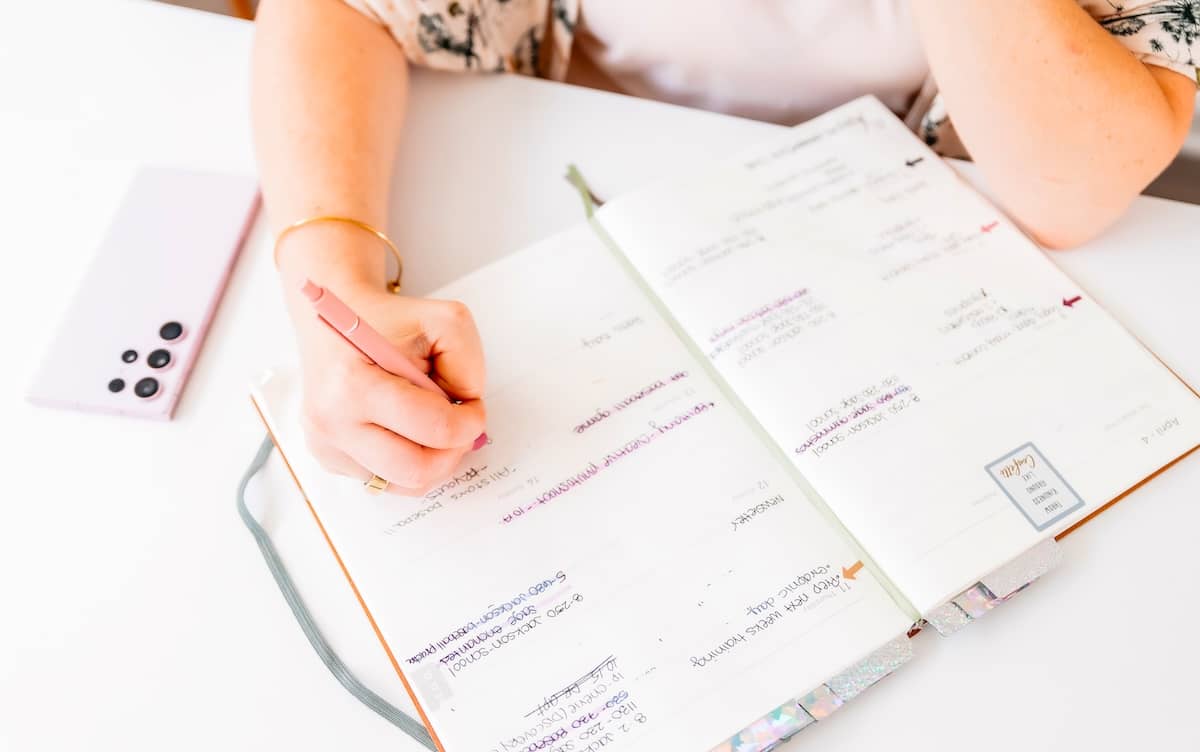
The goal of a paper planner is to keep all of your appointments, tasks, and reminders in one place, so you can stay on top of everything life throws at you.
Here are some different types of paper planners that you can choose from.
Paper planner
A paper planner is a physical notebook that you can use to organise tasks, appointments, and write to do lists.
My favourite paper planner is The Simplified Planner, which is great for planning in detail, and provides a clear overview of what you’ve scheduled over a month, week or day.
Some benefits of paper planners are:
- You can plan for different time periods, for example daily, weekly, monthly, or even yearly.
- You can add meal planners, budget and habit trackers, grocery lists, goals, and many other pages to help you plan other areas of your life.
READ MORE:
How to use a planner to stay organised
The best daily planners to stay organised every day
Bullet journal
A bullet journal is a 100% customisable notebook that can be used to record appointments, set a word of the year, plan your day, write lists, make travel plans, or record anything else you want to have a written record of.
I’ve used bullet journals a lot in the past, and my favourite was the Leuchtturm1917 bullet journal because it folded flat so was easy to write in, and it contained information within it to help start bullet journaling.
Some of the benefits of bullet journals include:
- As it’s 100% customisable you’re in total control of how to set it up.
- You can express your creativity by decorating your pages, or keeping them minimalist in design if that suits you better.
Notebook
When thinking about how to be productive at home, sometimes the simplest productivity tips are the best, and there’s nothing simpler than using a plain notebook to help you get things done.
The benefits of using a plain notebook are:
- It’s cost effective.
- It’s undated so you can use it whenever you like.
- Chances are you already have one in your home, so you can use it straight away.
Digital productivity tools
Digital productivity tools are apps, software, or online platforms that help you be more productive using your phone, tablet, or computer.
This type of productivity tool helps you:
- Keep track of family schedules
- Manage multiple to do lists
- Remind you of important events
- Help you meal plan and make grocery lists
- Organise household tasks and routines
- Store important information in one place
Some digital productivity tools that you can use are:
- Google Calendar, which is the digital productivity tool I use every day to keep track of school events, appointments, activities, and reminders
- Digital to do list apps like Todoist, your phone’s notes app, and Google Keep
READ MORE: 5 digital tools to boost your productivity

Combining paper and digital tools
Many mums find it helpful to use paper and digital planning systems together, myself included, because it gives you total flexibility on how to plan your time.
The way that I use Google Calendar and a paper planner together is:
- Using Google Calendar to remind me of date, time and location specific appointments, and to get an overview of what I have to get done over a certain month or year.
- Using a paper planner to list my top 3 priorities for a day, write lists, and to break larger goals or tasks into more manageable pieces.
Time blocking
Time blocking is when you break your day up into blocks of time, and allocate certain tasks to each time block.
Once a time block is finished you move onto the next block of time, and start to work on the tasks assigned to the next block.
Time blocking is one of my favourite productivity tips, because it enables you to focus your time and energy on similar tasks, so you’re using your time and energy in a more focused way.
Here’s an example of how you could use time blocking over the course of a day.
Morning time block 6–9
- Get yourself ready before everyone else wakes up
- Get kids ready for school
- Do the school run
Mid-morning time block 9–11
- Tackle your first 2 priorities for the day
- Book appointments
Afternoon time block 11–2
- Make and eat lunch
- Do household chores
- Start making dinner
Late afternoon time block 2– 6
- Do the school run
- Get kids to finish their homework
- Eat dinner as a family
- Start and finish your kid’s bedtime routine
The next section discusses how to group tasks together, so you can assign them to your time blocks.
READ MORE: How to use time blocking as a busy mum
Task batching
Task batching is when you group similar tasks together and complete them in one focused block of time, so instead of spreading tasks throughout the day, you batch them and tackle them all at once.
Some tasks that you can batch together based on similar levels of energy and time are:
Kitchen tasks
- Wash, dry, and put dishes away
- Load and run the dishwasher
- Wipe countertops
- Put leftover food away
- Sweep or vacuum floors
Back to school tasks
- Get PE kits ready
- Wash water bottles
- Make school lunches
- Make sure homework is done and packed in school bags
- Place school bags by the door
Laundry tasks
- Wash and dry laundry
- Fold laundry
- Put laundry away
READ MORE: How batching tasks can help you get more done at home
Routines
Routines help with productivity because they provide you and your family with the steps they need to follow to get things done.
Here are two routines that help you and your family be productive.
Evening routines
A productive morning starts with being organised the night before.
Here are some things you can do each evening to ensure your mornings are productive, and less chaotic.
- Put items back where they belong
- Lay out school uniforms, including socks and underwear
- Choose your outfit for the next day
- Hang coats and school bags by the front door
- Make school lunches and pack them in the fridge
- Put water bottles on kitchen counters to fill the next morning
- Check your planner and prepare for the next day’s events
- Get breakfast items out (bowls, cereal, etc.)
READ MORE: A simple evening routine checklist for a productive morning
Weekly planning routine
A weekly planning routine is when you make time each week to plan the upcoming week, so you can focus your time and energy on things that are important.
Here are some of the things that I include in my weekly planning routine:
- Prepare for upcoming appointments
- Write a weekly meal plan
- Make sure I have ingredients needed for school lunches
- Write lists for things I need to schedule before the school term ends
READ MORE: How to start a weekly planning routine
Daily habits
As a busy mum it can feel impossible to have a productive day, even if you start the day with the best intentions.
However, with a few small daily habits you can end the day feeling productive.
Some simple daily habits you may like to start to help you when you’re thinking about how to be productive at home include:
- Placing keys, school bags, coats, and school shoes by the front door each night
- Cutting up fruit, getting cereal containers out, and setting the table for breakfast before going to bed
- Clearing kitchen countertops of paperwork and clutter each night
- Writing down 3 things you need to get done the next day after dinner
READ MORE:
Simple habits to help you have a productive day
20 things you can do in 20 minutes for a productive day
Brain dump
A brain dump is when you write down everything that’s in your brain, which helps clear your brain of clutter, as well as helping you to take action on all the things you need to do.
You can do a brain dump as part of your end of year planning, each day, each week, or any other timeframe that suits you.
Some things you can include in your brain dump are:
- Bills to pay
- Books to read
- Date night ideas
- Deep cleaning tasks
- Gift ideas
- Grocery list items
- Places you want to visit
- To do lists
- TV shows to watch
READ MORE: How to do a brain dump to help manage mum life
Journaling
Journaling is when you write down your thoughts, feelings, and experiences so you can process your feelings towards something.
It’s also a great way to practice self-care, and helps to reduce the mental load of motherhood.
Journaling can take many forms including diary entries, brainstorming, list making, and randomly writing down your thoughts.
If you’d like to get a feel for what journaling is like, here are 5 questions that you can write answers to in a notebook, that are designed to get you thinking about any productivity challenges you may have.
- How can I start being more intentional with my time?
- How do I procrastinate, and how can I stop?
- How can I slow down and enjoy life more?
- What are my top 3 priorities for the following day, and how will I achieve them?
- What can I do differently today that I didn’t do yesterday?
READ MORE: Benefits of journaling for mums, plus 50 journal prompts

Goal setting
As mums we juggle a lot, which means that sometimes finding time to work on our goals feels impossible.
This is why setting smaller, more manageable goals that you can actually achieve is important.
Here are some smaller, more manageable goals that you may like to set for yourself or your family:
15 minute daily reset
Each evening you could set a timer for 15 minutes and put bags, dishes, laundry, toys, and mail away.
Quick daily home resets help keep clutter under control, and reduce the amount of time you spend doing larger cleans each week.
RELATED POST: How to do a 15 minute home reset every night
Life admin tasks
One of my most consuming tasks is life admin, it’s amazing how quickly small tasks can build up.
Tackling one life admin task a week is a great way to keep on top of this part of mum life, and can include:
- Booking appointments
- Paying bills
- Renewing library books
- Returning or sending parcels
Drop zone
Choose a spot in your home where you can store items that you use on a daily basis, such as keys, backpacks, coats, and shoes, so you spend less time each morning searching for items you need.
RELATED POSTS:
Realistic goal setting examples for overwhelmed mums
10 family goals examples for a happier home
Productivity books
Reading books about productivity can teach you new ways to better manage your time, reduce decision fatigue, and help you to find time to spend on the things you love.
Here are 3 of my favourite productivity books that have helped me think about productivity in a different way.
- Essentialism by Greg McKeown, covers how to manage your time by eliminating activities that aren’t necessary.
- Fair Play by Eve Rodsky, talks about how you can divide household responsibilities more fairly.
- Make Time by Jake Knapp and John Zeratsky, provides simple strategies to help you make small daily changes, instead of big life overhauls that aren’t realistic.
READ MORE:
My top 5 time management books for mums
20 time saving tips for mums that really work

How to stay productive
One of the biggest challenges with productivity is maintaining your productivity habits when life gets busy.
Here are some things you can do to keep your new productivity habits going for the long term.
Keep things simple
Choose a productivity system that’s easy for you to maintain.
For example, use a paper planner that only allows you to plan your days, instead of one that has a daily planner, meal planner, habit tracker or any other addition.
If you use a paper planner that has too many additions, it will feel overwhelming to use and you may never actually use it.
Another way to keep things simple is when starting an evening routine. Start by adding a couple of steps to it, and then when you feel comfortable add a few more.
Keep things flexible
There will be some weeks when school holidays, sickness, or busy seasons will prevent you from getting things done.
Being flexible and changing your focus, or putting things off for another time, is a great way to not let a non-productive week put you off being productive in the future.
Adjust your systems regularly
One of the best ways to maintain your productivity habits is to regularly adjust the systems and routines you’re using.
Family life constantly changes, and something that worked well during one season may stop working in another.
Instead of trying to force yourself to stick to productivity systems that no longer fit your stage of life, adjust what you’re doing so you’re doing things that work for your current stage of life.
This could look like:
- Removing steps from a routine when life is busy
- Choosing a planning system your whole family can use
- Outsourcing household chores that you no longer have the time or energy to do
- Creating new habits that better support your current stage of life
Spending some time each week or month to look at what’s working and what’s not, will help you to choose systems that work better.
How to be productive – a recap
Learning how to be productive as a mum isn’t about doing more, filling every minute of your day, or trying to keep up with unrealistic expectations.
It’s about creating simple productivity systems that help make you more productive at home, and in life.
Flexible routines, realistic goals, simple planning systems, and small daily habits will be easier to maintain than complicated systems that add pressure to your already busy schedule.
Productivity isn’t about perfection. It’s about reducing overwhelm, making intentional use of your time, and creating routines that support your family and your wellbeing.
Lastly, give yourself permission to adjust your productivity choices when life changes. Productivity should support your life; not make you feel like you’re constantly falling behind.
Ready to get more organised?
If you enjoyed these tips, don’t forget to download your FREE toolkit full of printables to make decluttering and home organisation easier. Get your FREE toolkit here.
Which productivity tool from this guide could you try today?
Love this post? Share it with others on Pinterest – Thank you!