How batching tasks can help you get more done at home

Juggling home life can be overwhelming, but batching tasks is a simple strategy that can help you get more done without feeling exhausted.
Instead of jumping between laundry, tidying, cooking, and admin all day long, task batching allows you to focus on one type of task at a time. This not only helps you work more efficiently, but also reduces mental load, minimises distractions, and gives you the satisfaction of actually completing jobs, instead of leaving them half-finished.
In this post you’ll learn exactly what task batching is and why it works so well for busy home life. We’ll walk through the benefits from saving time, to reducing overwhelm, and show you how to start using batching in a way works.
You’ll also discover a simple step-by-step approach for how to batch tasks at home, including how to identify daily tasks, group them effectively, and assign realistic time blocks throughout your day.
Plus, you’ll find practical examples of common household task batches like laundry, meal prep, school prep, and home resets, so you can put this method into action.
By the end of this post you’ll have a system that helps you stay focused, get more done, and feel calmer and more in control of your home life.
Download your FREE daily planner to help you batch tasks here
Bookmark this post for future reference on Pinterest. Thank you!
This post may contain affiliate links, which means I’ll receive a commission if you purchase through my links, at no extra cost to you. Please read our full disclosure for more information
What is task batching?
Task batching, or the batching method, is when you group similar tasks together and complete them in one focused block of time.
Instead of spreading tasks throughout the day, you batch them and tackle them all at once.
For example, instead of doing one load of laundry in the morning, folding it in the afternoon, and starting another load in the evening, you might do all of your laundry tasks together in one block, which will make laundry more time efficient.
The benefits of task batching
Task batching helps:
- Reduce mental load by keeping your brain focussed on one type of activity at a time, instead of constantly switching between tasks
- You work faster and more efficiently by focusing on one task at a time, for example cooking multiple meals at once, folding all laundry in one go, or replying to messages together
- You finish jobs instead of having many half-finished jobs waiting to be completed
- You save time giving your day more structure and flow
- Makes you feel more productive
How to start batching tasks
Here’s how you can start the batching method at home.
Step 1: Identify regular tasks
Make a list of tasks you do regularly.
For some inspiration, here are some tasks that I do often:
- Laundry
- Cooking
- Grocery shopping
- Cleaning
- School prep
- Admin (emails, forms, appointments)
- Tidying
- Errands
RELATED POSTS:
How to do a brain dump to help manage mum life
How to simplify mealtimes with family meal planning
Step 2: Group similar tasks together
Grouping similar tasks together enables you to see what tasks require similar energy levels or resources, so you can do these types of tasks at the same time.
Some examples of tasks that you can batch together based upon similar energy levels or resources are:
Kitchen tasks
- Wash, dry, and put away dishes
- Load and run the dishwasher
- Wipe countertops
- Put away leftover food
- Sweep or vacuum
Back to school tasks
- Get PE kits ready
- Wash water bottles
- Make school lunches
- Make sure homework is done and packed in school bags
- Place school bags by the door
Laundry tasks
- Wash and dry laundry
- Fold laundry
- Put away laundry

Home reset tasks
- Put toys away
- Put items back where they belong
- Sweep or vacuum
- Load and run the dishwasher
- Wipe countertops
Admin tasks
- Reply to emails
- Book appointments
- Fill out forms
Meal prep tasks
- Chop vegetables
- Pre-cook components of meals
READ MORE: A simple evening routine checklist for a productive morning
Step 3: Assign time blocks
Assigning blocks of time to your batched tasks is the best way to ensure that you complete them.
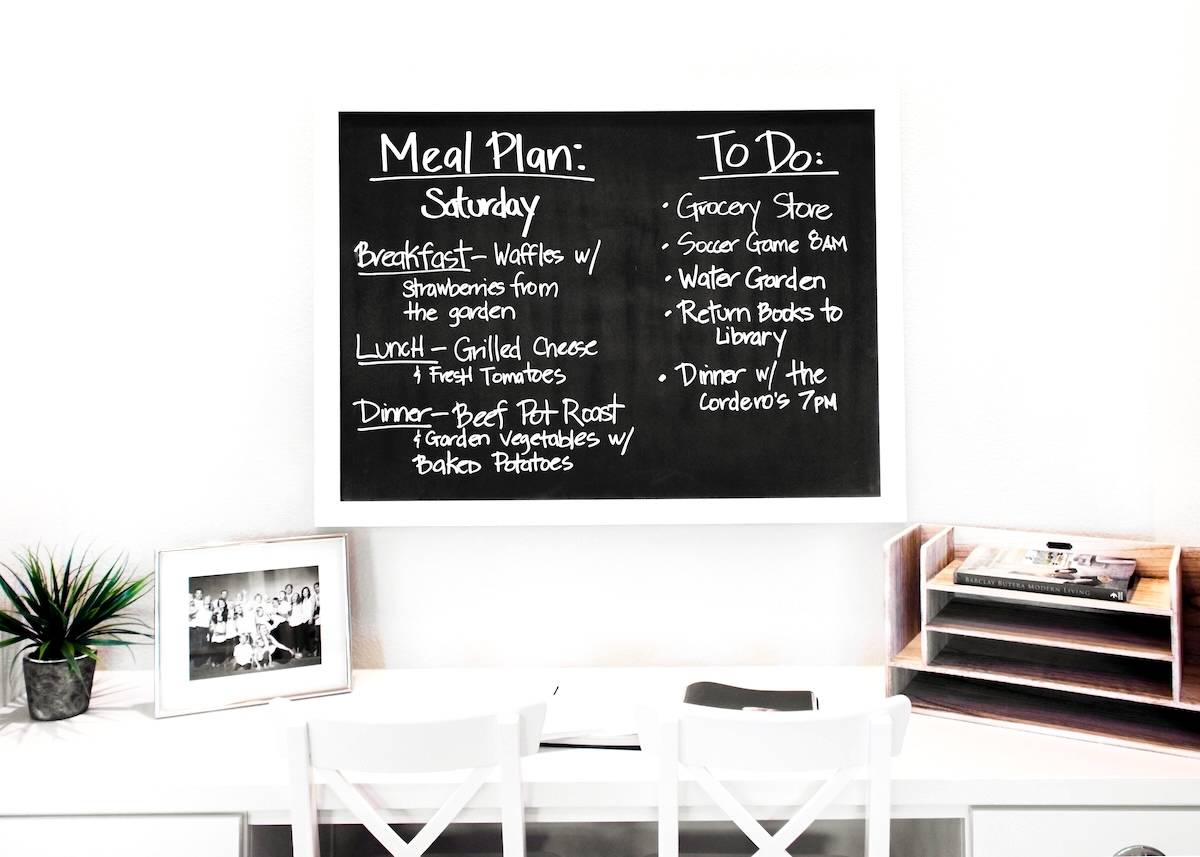
You can do this by writing down the hours you have available in your day and then assigning tasks to these time blocks, which you can do on a digital calendar, notepad, or in a time block planner.
An example of some blocks of time and the tasks you can do in them are:
- Morning time block: back to school tasks + quick tidy
- Midday time block: admin tasks
- Afternoon time block: laundry tasks
- Evening time block: home reset tasks
TOP TIP: Allocate tasks according to your energy levels. If you know you have the most energy in the mornings, then do the tasks that take a lot of energy like home reset tasks, or cleaning tasks. If you have low energy at night, then admin tasks are perfect because they don’t require a lot of energy to complete.
READ MORE:
How to use time blocking to improve productivity
The best daily planners to stay organised every day
Step 4: Focus on one batch at a time
When you’re doing your tasks, turn off phone notifications, ignore tasks that aren’t part of the batch, and make sure you stay focussed on getting as much done in the time you have.
A good way to stay focussed is to set a timer and push yourself to get as much as you can done before the timer goes off.
Tips to make batching work
Here are some tips to make sure the batching method works for you.
Start small
When you start to batch tasks, don’t batch too many at once.
Instead, start with one batch like laundry or cleaning, and do as much as you can in the time you have.
Be flexible
There will be days when you’re unable to complete the batch of tasks you had planned, and that’s okay.
Reminding yourself that you can always go back to completing the tasks another time, is a great way not to be disheartened that you couldn’t do what you planned.
Stay consistent
The more you repeat your batches the more natural they become, and before you know it you’ll be doing your batched tasks without even realising it.
RELATED POST: Simple habits to help you have a productive day
How batching tasks helps with productivity – a recap
When you batch tasks, you make a huge difference to how productive you feel.
Instead of jumping between tasks, feeling scattered, and ending the day with lots of half-finished tasks, you’re creating focused blocks of time where things actually get done.
By grouping similar tasks together, assigning realistic time blocks, and focusing on one batch at a time, you give your day more structure and flow, you reduce mental load, work more efficiently, and start to feel more in control of your home.
The key to making task batching work for you is to keep it simple. Start with one batch and build consistency. Over time, batching tasks will become second nature. You’ll spend less time deciding what to do next, and more time actually getting things done.
Ready to get more organised?
If you enjoyed these tips, don’t forget to download your FREE toolkit full of printables to make decluttering and home organisation easier. Get your FREE toolkit here.
Which tasks could you start batching to make your day feel more productive?
Love this post? Share it with others on Pinterest – Thank you!